
How to Patch a Hole in Drywall Yourself
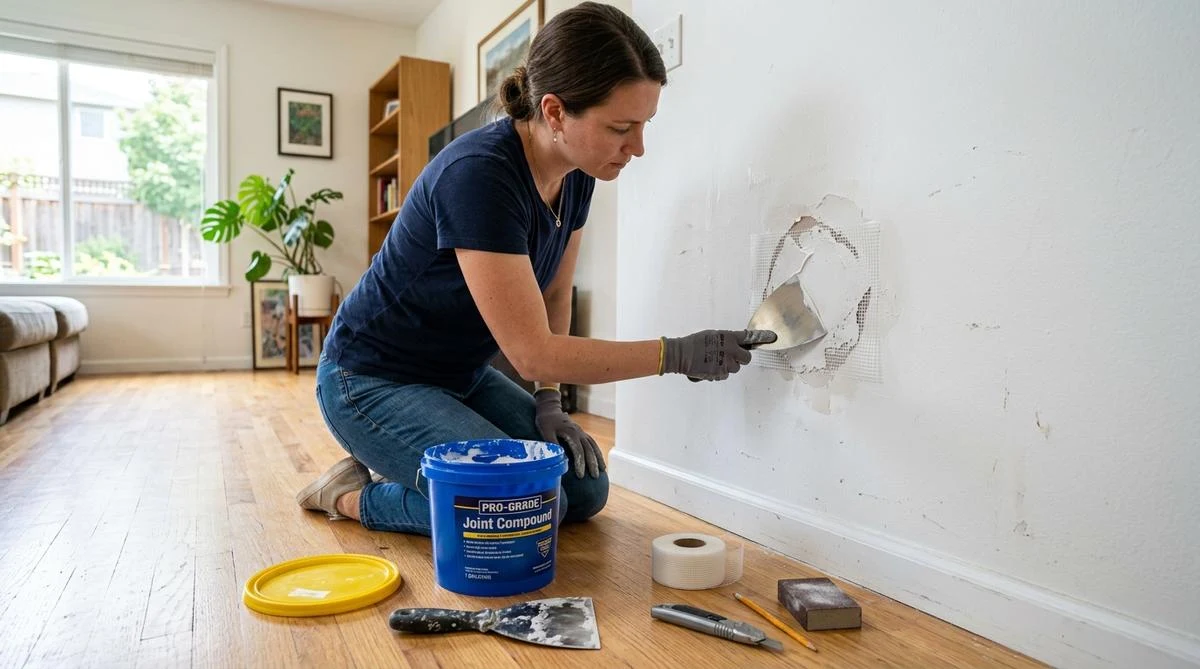
A hole in the wall is more common than you'd think. Doorknob punched through drywall. A wall anchor that tore out taking a chunk with it. A plumber who cut an inspection hole and never came back to patch it. Whatever the cause, you can fix it yourself in a few hours. Total materials: $15–$40. No contractor, no drama.
The method you use to patch drywall depends on the hole size. Small nail holes take two minutes. A 6-inch sheetrock repair takes an afternoon and two coats of joint compound. Here's how to handle each one.
What You'll Need (By Hole Size)
Before you start any drywall repair, match your tools to the job:
| Hole Size | Method | Key Materials |
|---|---|---|
| Under 1/2 inch (nail, screw) | Spackle only | Lightweight spackle, putty knife, sandpaper |
| 1 inch – 6 inches | Drywall mesh patch + joint compound | Self-adhesive mesh patch, joint compound, 6" putty knife, 150-grit sandpaper |
| 6 inches and larger | New drywall panel + California Patch | Drywall sheet, drywall saw, screws, mesh tape, joint compound, primer |
Method 1: Small Holes (Under 1/2 inch) — Spackle Fix
This covers nail holes, small screw holes, and minor anchor damage. Takes about 5 minutes active time, plus drying.
Steps
- Clean the edges. Run your finger around the hole. Any loose paper or drywall crumbles? Pick it off. You want a clean edge for the spackle to stick to.
- Apply lightweight spackle. Load a small amount onto a putty knife. Press it into the hole, leaving a slight mound — spackle shrinks slightly as it dries.
- Scrape flat. Drag the blade across in one smooth stroke. Goal is flush with the surrounding wall, not a crater or a bump.
- Let it dry. Lightweight spackle dries in 30–60 minutes. Most brands go from pink to white when fully dry.
- Sand lightly. 150-grit sandpaper, light circular motion. Just knock off any raised edges.
- Paint. Prime if using flat paint, match your wall color and you're done.
Quick tip: Don't use joint compound for tiny holes. Spackle dries faster and doesn't shrink nearly as much on small wall repair jobs. Save the joint compound for bigger holes.
Method 2: Medium Holes (1–6 inches) — Drywall Mesh Patch
This is the most common repair — a doorknob hole, an anchor that went wrong, damage from moving furniture. A self-adhesive drywall mesh patch (also called a wall repair kit) gives you a ready-made base for the joint compound. You can grab one at Home Depot or Lowe's for $5–$8.
Steps
- Prep the surface. Sand around the hole lightly to remove loose paper or paint flakes. The mesh patch sticks better on a clean, slightly roughed surface.
- Apply the mesh patch. Peel and stick. Center it over the hole. Press firmly from the middle outward to avoid air bubbles. The mesh is the structural base — it gives the joint compound something to grip onto.
- First coat of joint compound. Use all-purpose joint compound (not spackle for this size). Load your 6-inch putty knife and spread it over the mesh in thin, even strokes. Cover the entire mesh plus 2–3 inches beyond the edges. This is called feathering the edges — blending the patch into the surrounding wall so it disappears when painted.
- Let it dry completely. Joint compound takes 8–24 hours per coat depending on humidity and thickness. Rushing is the #1 mistake. Wet compound under a dry surface will crack. Wait until it's completely white and hard.
- Sand, then second coat. 150-grit sandpaper, smooth the first coat. Wipe dust with a damp cloth. Apply a second thin coat of joint compound, feathering out even further this time. Some repairs need a third coat.
- Final sand. Once the last coat is bone dry, sand smooth. Run your hand over it — should feel flush with the wall. No ridges, no bumps.
- Prime and paint. Always prime before painting a patched area. Unprimed joint compound absorbs paint unevenly and leaves a dull spot ("flashing") even after two paint coats.
Feathering the edges is the real skill here. Beginners stop the compound right at the mesh edges and end up with a visible raised square. Fix: extend your strokes further out each coat, thinning to almost nothing at the edges. The wider you go, the more invisible the sheetrock repair.
Method 3: Large Holes (6+ inches) — New Drywall Panel
Anything bigger than 6 inches needs actual new drywall, not just compound. The mesh patch won't bridge the gap with enough strength for a lasting fix.
The California Patch technique works great for holes up to about 10–12 inches without needing to locate studs:
- Cut a clean rectangle. Use a drywall saw or utility knife to square off the ragged hole into a clean rectangle. Clean edges = cleaner patch.
- Cut a patch piece. Cut a piece of new 1/2-inch drywall about 4 inches wider and taller than your hole. Score the back, snap it, then peel the paper off the back leaving a 2-inch paper border all around. This paper border attaches to the wall face.
- Apply joint compound, press patch in. Spread a thin layer of compound on the wall around the hole. Press the patch in place — the paper border bonds to the compound on the wall face.
- Coat and feather. Two to three coats of joint compound, letting each dry fully. Feather the edges at least 6–8 inches out from the patch.
- Sand, prime, paint. Same finish process as Method 2.
For holes wider than 12 inches, cut back to the nearest studs and screw a new drywall panel in properly. Bigger job, still very DIY-able with a drill and a straight cut.
Spackle vs Joint Compound — Which One Do You Actually Use?
Short answer:
- Spackle: Small holes under 1/2 inch. Dries in 30–60 minutes. Less shrinkage on tiny repairs. Can't bridge a gap.
- Joint compound (mud): Anything bigger. Stronger, more workable, better for feathering edges. Dries in 8–24 hours per coat. Shrinks as it dries — which is why you need multiple thin coats, not one thick blob.
Joint compound can replace spackle for small holes if that's what you have. Spackle cannot replace joint compound on bigger drywall repair jobs — it's not strong enough to bridge a gap and will crack over time.
Common Mistakes That Ruin a Drywall Repair
- Applying compound too thick. One fat coat cracks as it dries. Always 2–3 thin coats.
- Not feathering the edges. The patch will be visible as a raised square under your paint.
- Skipping primer. You'll see a dull patch (flashing) through the paint. Prime first, always.
- Painting over wet compound. It looks dry on top and isn't. Poke it gently — if it dents, it's still wet inside.
- Ignoring texture matching. Flat walls are easy. If your walls have orange peel or knockdown texture, you'll need a texture spray or sponge technique before painting — otherwise the patch stands out like a sore thumb.
FAQ
How long does a drywall repair take from start to finish?
Small holes: 1–2 hours including dry time. Medium holes (1–6 inches): 1–2 days once you factor in drying between coats. Large holes: 2–3 days. Most of the time is just waiting for compound to dry — the actual hands-on work is 30–45 minutes total.
Can I use toothpaste or soap to fill a nail hole?
You can, but it's not a real fix. Toothpaste shrinks, cracks, and won't hold up over time. Lightweight spackle costs $5 at any hardware store and does the job properly.
Do I need to sand between coats of joint compound?
Yes. Light sanding between coats (150-grit) smooths out ridges and helps the next coat bond. Don't skip this — it's what separates a smooth invisible repair from a lumpy obvious one.
How much does it cost to hire someone to patch drywall?
A contractor typically charges $75–$200 per hole depending on size and location. DIY materials for a medium hole run $15–$25. The skill gap is small — this is one of the best repairs to learn yourself.
How do I match wall texture after patching?
Orange peel texture: use a spray can texture product (Homax makes a solid one, around $8 at Home Depot). Knockdown texture: apply joint compound with a sponge and knock it down with a drywall knife before it fully sets. Smooth walls: sand perfectly flat, prime, paint.
Patching drywall is one of those repairs that feels harder than it actually is. Once you've done it once, you'll wonder why you ever called a professional for it. The keys: thin coats, patience while drying, feather the edges, and always prime before you paint.
Post a Comment for "How to Patch a Hole in Drywall Yourself"
Post a Comment