

Marcus ran a landscaping crew and parked $42,000 in a business checking account because his banker said it was "more flexible." Eight months later he'd earned $0 in interest while a savings account would've paid him roughly $1,800. Worse, he got dinged a $35 monthly fee he never noticed.
That's the real cost of guessing wrong on the difference between checking and savings account. Most guides hand you a vague chart and call it a day. You'll get actual fee numbers, the qualification rules banks bury in fine print, and a decision matrix you can apply before your next deposit clears.
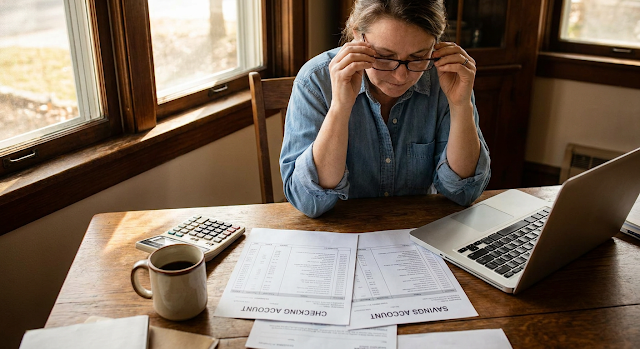
Here's the short version, and then we'll get into the money. A checking account moves money. A savings account grows money. Mix those jobs up and you either bleed fees or leave interest on the table. Marcus did both.
The mistake isn't picking the "wrong" account type. It's not knowing the fee triggers and rate tiers that decide whether either account actually works for your situation. Banks count on you skimming the disclosure PDF. So let's read it for you.
What Account Mechanics Actually Control Your Money
Both accounts hold deposits and both are FDIC-insured up to $250,000 per depositor, per bank. That part's identical. After that, they split hard.
Transaction Limits And Access Rules
Checking accounts let you move money as often as you want. Debit card swipes, ACH transfers, paper checks, wire payments — no cap on how many you run per month. That's the whole point of the product.
Savings accounts used to cap you at six withdrawals per month under federal Regulation D. The Fed suspended that limit in April 2020, but here's what nobody tells you: most banks kept the cap anyway as their own policy. Pull money out seven times in a month and you'll often eat a $5 to $15 excess-withdrawal fee per transaction. Some banks convert your savings to checking after repeated violations. Read your specific bank's terms — the federal rule changing didn't change your contract.
Interest Earning Power
Checking accounts typically pay nothing, or a token 0.01% to 0.07% APY. Savings accounts pay real money. As of early 2026, high-yield savings accounts run between 3.8% and 4.5% APY at online banks, while big brick-and-mortar banks still offer a laughable 0.01% to 0.42%.
On $42,000, the gap between a 0.01% checking rate and a 4.3% online savings rate is about $1,800 a year. That's Marcus's missing money. The account type mattered less than where he opened it.
Qualification Criteria Banks Don't Advertise
You'd think any account is easy to open. Mostly true — until you hit the screening systems and minimum thresholds nobody mentions upfront.
The ChexSystems Screen Most People Never Hear About
Roughly 80% of US banks run your name through ChexSystems before approving any deposit account. It's a reporting agency that tracks closed accounts, unpaid overdrafts, and suspected fraud. A negative mark stays on your file for five years. If you bounced an account two years ago, you can get rejected for both checking and savings at most mainstream banks — and they rarely tell you that's why.
Workaround: "second chance" checking accounts and online-only banks like Chime or Varo skip the ChexSystems gate. You won't get rejected, but you trade away some features.
Minimum Deposit And Balance Tiers
Here's the qualification matrix providers bury:
- Basic checking: $0 to $25 opening deposit, often $0 minimum balance if you set up direct deposit
- Interest checking: $1,500 to $10,000 minimum balance to dodge the monthly fee
- Basic savings: $25 to $100 opening deposit, $300 to $500 minimum to skip fees
- High-yield savings (top tier APY): frequently requires $5,000 to $25,000 to hit the advertised rate
That last one's the trap. The 4.5% APY in the ad? It often applies only above a balance threshold or only to new money. Below it, you might earn 0.5%.
Full Cost Breakdown — Every Fee To Calculate
This is where the difference between checking and savings account cost gets real. Banks earn billions on fees most customers never track.
Checking Account Fees
- Monthly maintenance: $0 to $35 (waivable with balance or direct deposit minimums)
- Overdraft fee: $35 average per item — banks collected over $5.8 billion in overdraft and NSF fees in 2024 per CFPB data
- Out-of-network ATM: $3 to $5 from your bank, plus $2 to $4 from the ATM owner
- Wire transfer: $25 to $35 domestic outgoing, $40 to $50 international
- Stop payment: $30 to $35
Savings Account Fees
- Monthly maintenance: $0 to $10 (waivable with $300 to $500 balance)
- Excess withdrawal: $5 to $15 per transaction over the limit
- Dormant account fee: $5 to $20 monthly after 12 months of no activity — the fee almost nobody knows exists
- Early account closure: $25 if you close within 90 to 180 days of opening
Run the math on Marcus again. $35 monthly checking fee for eight months equals $280 in pure waste, on top of $1,800 in missed interest. A $2,080 lesson from one wrong choice.
How To Compare Your Options Objectively
Stop comparing account names. Compare them against how your money actually moves.
The Decision Matrix
Ask three questions before you open anything:
- How many times a month do you move money out? Six or more → checking. Two or fewer → savings.
- What's your average idle balance? Over $5,000 sitting still → high-yield savings, no debate.
- Can you meet the fee-waiver minimum every month? If not, find a $0-minimum account or you'll bleed maintenance fees.
For most small business owners, the answer's both — a checking account for daily operations and a separate high-yield savings for reserves and tax money. The contrarian take? Keeping everything in one "flexible" checking account is the single most expensive habit in personal and small-business banking. Flexibility costs you the entire interest rate.
APY Versus Real Access
A 4.5% online savings rate is useless if you need cash same-day and the transfer takes three business days. Match the product to your urgency. Tax reserves and emergency funds belong in high-yield savings. Payroll and vendor payments belong in checking with instant access.
Red Flags And Traps Most People Miss
Teaser Rates And Tiered APY
That headline APY often expires. Some banks advertise 5% for the first three months, then drop to 0.4%. Others pay the top rate only on balances under $25,000 — or only above it. Always find the rate tier table, not the marketing number.
Fee Waivers That Quietly Reset
Your direct-deposit waiver works until the month your deposit lands a day late or comes in $1 under the threshold. Then the $35 fee hits without warning. Set a calendar alert to verify your waiver conditions quarterly. Banks won't remind you — the fee is the reminder.
Step-By-Step Process To Choose Right
Before You Apply
- Pull your free ChexSystems report at chexsystems.com to spot rejection risk
- Calculate your monthly transaction count and average idle balance
- List your fee-waiver eligibility honestly
During Setup
- Open checking for operations, high-yield savings for reserves
- Confirm the APY tier matches your balance
- Read the excess-withdrawal and dormancy clauses — yes, the boring part
- Link both accounts for free internal transfers
Top Providers And Solutions Compared
Online Banks Versus Traditional Banks
Online banks (Ally, Marcus by Goldman Sachs, Discover) pay 3.8% to 4.5% savings APY with $0 monthly fees and no minimums. The trade-off: no branches and slower cash deposits. Traditional banks (Chase, Bank of America, Wells Fargo) offer branches and instant access but pay 0.01% to 0.42% on savings and charge $12 to $35 maintenance fees unless you clear high balances.
Credit Unions As The Quiet Winner
Credit unions averaged better rates and lower fees than big banks across 2025, per NCUA data, and they're often friendlier to applicants with thin ChexSystems history. For a small business owner who wants both decent rates and a human to call, a local credit union usually beats both extremes.
The Costly Mistakes That Keep Repeating
Parking large balances in checking is mistake number one — it's literally Marcus's $1,800. Number two: ignoring the dormancy fee on a savings account you opened and forgot. Number three: assuming the advertised APY applies to your balance. Number four: getting silently rejected by ChexSystems and not understanding why. Each one's avoidable with five minutes of reading the disclosure most people scroll past.
Frequently Asked Questions
Who actually gets rejected when opening a checking or savings account, and why?
People with negative ChexSystems records — unpaid overdrafts, accounts closed for cause, or suspected fraud — get rejected most often, and the mark lasts five years. About 80% of banks screen this way. If you've got a flagged history, online-only banks and second-chance checking accounts skip the screen entirely.
What's the full fee breakdown including the hidden costs nobody mentions?
Beyond the obvious $35 overdraft and $0-to-$35 monthly maintenance fees, watch for dormancy fees ($5 to $20 monthly after a year idle), excess-withdrawal fees on savings ($5 to $15 each), and early closure fees ($25 within the first few months). These quietly drain accounts people stopped watching.
How long does approval take and when can I actually use the money?
Online applications approve in 5 to 15 minutes if your ChexSystems record is clean; in-branch takes about 30 minutes. Your initial deposit, though, may hold 1 to 5 business days before it's spendable, and external transfers between online savings and checking often take 1 to 3 business days.
Post a Comment